
Influential colour-focused photographers
Posted on January 1, 2026 • 10 minutes • 1961 words
Colour Photography Masters - Reference Guide
A curated collection of the most influential colour photographers and their essential works. This guide serves as a starting point for anyone serious about studying colour photography.
The Pioneers
William Eggleston (b. 1939)
Often called the “Godfather of Colour Photography.” His 1976 MoMA exhibition was controversial but groundbreaking, legitimizing colour photography as fine art. Known for his saturated images of everyday Southern life and his iconic “Red Ceiling” photograph.
Essential Books:
- William Eggleston’s Guide (1976) - The landmark MoMA exhibition catalog featuring 48 images from Memphis
- The Democratic Forest (10 volumes, 1989) - Over 1,000 photographs from extensive American travels
- Chromes (2011, Steidl) - Unpublished Kodachrome slides with vibrant colours
- Election Eve (1977/2017) - Journey to Jimmy Carter’s hometown, Plains, Georgia
- The Outlands: Selected Works (David Zwirner) - Previously unseen images from 1969-1974
- William Eggleston Portraits (David Zwirner) - Memphis club scene, celebrities, and Southern life
- Before Colour - Early black and white work showing his foundations
- Los Alamos Revisited (2012, Steidl)
- Paris - Three years in the French capital
Key Characteristics:
- Saturated, vivid colours using dye-transfer printing
- Mundane subjects elevated to art
- Unconventional compositions
- Master of the colour red
- Democratic approach to subject matter
Stephen Shore (b. 1947)
A key figure in the “New American Colour Photography” movement. Known for large-format work documenting mundane American scenes with meticulous attention to colour relationships and formal composition.
Essential Books:
- Uncommon Places: The Complete Works (Aperture, 1982/2004/2015) - The definitive collection, regularly updated
- American Surfaces (Phaidon, 2005) - Earlier snapshot-style road trip work
- A Road Trip Journal (Phaidon) - Diary with printed ephemera
- Various commissioned works on American architecture
Key Characteristics:
- Cool, objective approach
- Large-format (8x10) camera work
- Meticulous attention to colour relationships
- Formal composition
- Roots in Pop and Conceptual art
- Influenced by Walker Evans and Robert Frank
Background:
- At age 14, had work purchased by Edward Steichen for MoMA
- At age 24, first living photographer to have one-man show at Metropolitan Museum since Stieglitz
- Director of Photography Program at Bard College since 1982
Saul Leiter (1923-2013)
Created painterly colour street photography in 1940s-60s New York, often shooting through windows and using reflections. His work has a sophisticated, almost abstract quality.
Essential Books:
- Early Colour (Steidl, 2006/2013) - The book that brought him recognition late in life
- Early Black and White (Steidl, 2014)
- In My Room (Steidl, 2018) - Intimate black and white portraits
- Forever Saul Leiter (2021)
- The Unseen (2022)
- Saul Leiter: The Centennial Retrospective (2023)
- Women (2018)
- All About Saul Leiter (Seigensha, 2017)
- Painted Nudes (Sylph Editions, 2016)
Key Characteristics:
- Soft, muted colour palettes
- Shooting through windows and using reflections
- Abstract compositions
- Layered imagery
- Influenced by abstract expressionist painters
- Work often compared to Mark Rothko and Barnett Newman
Background:
- Moved to New York in 1946 to become a painter
- Exhibited by Edward Steichen at MoMA in 1953
- Work remained largely unknown until 2006
- Subject of documentary In No Great Hurry: 13 Lessons in Life with Saul Leiter (2013)
Joel Meyerowitz (b. 1938)
One of the earliest advocates for colour street photography, beginning in 1962. Known for capturing fleeting moments with rich colour palettes in New York City and American landscapes.
Essential Books:
- Cape Light (Aperture, 1978/2015) - Seminal work, sold over 100,000 copies
- Aftermath: World Trade Center Archive (2006) - Only photographer with unrestricted access to Ground Zero
- Bystander: The History of Street Photography
- Provence: Lasting Impressions
- Redheads
- Tuscany
- Wild Flowers
- Early colour street work from 1960s New York
Key Characteristics:
- Began shooting colour in 1962
- Master of natural light
- Large-format colour work
- Captures fleeting moments with rich colour
- Transforms everyday scenes through light and colour
The New American Colour Photography Movement
Context
A watershed moment in the 1960s-70s when colour became accepted as legitimate fine art. Besides those mentioned next, this movement included photographers like Joel Sternfeld and many others who focused on contemporary American life, suburbia, and critiques of the American Dream — all through intentional use of colour.
Key figures legitimized colour photography through:
- Focus on contemporary American life
- Documentation of suburbia and consumer culture
- Critiques of the American Dream
- Moving beyond commercial/advertising applications
Other Key Figures in the Movement:
- Richard Misrach - Part of the New American Colour movement, known for large-format desert landscapes.
- Joel Sternfeld - American landscapes and social commentary
- Helen Levitt - Pioneer street photographer who embraced colour to capture New York City life with both documentary precision and artistic sensibility.
- Lucinda Devlin - Interiors with specific functions
Australian Masters
There are also several notable Australian photographers who work significantly with colour.
Contemporary Australian Colour Photographers
Tracey Moffatt AO (b. 1960)
Known for: Vibrant colour photography and film, narrative storytelling
Essential Work:
- Something More (1989) - “six vibrant Cibachrome colour prints” - her breakthrough series
- Uses both black and white and colour strategically
- Represented Australia at 2017 Venice Biennale
Key Characteristics:
- Vibrant Cibachrome colour prints with theatrical staging
- Borrows from film language and cinematic techniques
- Uses painted backgrounds and artificial settings
- Juxtaposes colour and black & white within series
- Influenced by Italian neo-realist cinema, popular culture, Hollywood
Major Series:
- Something More (1989) - vibrant colour Cibachromes
- Pet Thang (1991) - exploring sexuality with colour
- Laudanum (1998) - mixing colour and B&W
- Up in the Sky (1997) - influenced by Italian cinema
- Scarred for Life (1994, 1999)
- Night Spirits (2013) - “Nunnery in Red, by the Orange Tree in Blue, Desert in Yellow”
- Portales (2019) - diptychs influenced by Edvard Munch
Style:
- Experimental with shooting and printing techniques
- Controls colour, costumes, location rigorously
- Creates surrealist worlds through colour
- Questions conventions of narrative through colour choices
Collections: Tate, MoMA LA, National Gallery of Australia, AGNSW
Rennie Ellis (1940-2003)
Known for: Social documentary in vibrant colour, capturing Australian popular culture
Essential Books:
- Sydney in Colour (c. 1971)
- Decadent: 1980-2000 (2014) - published posthumously
- 17 total photography books
Key Characteristics:
- “Very strong when he used colour” (contemporary assessment)
- Documented 1970s-2000s Australian life in vivid colour
- Captured beach culture, nightlife, music scenes, protest
- Social realism approach
Style:
- Both black & white and colour work
- Street photography with accomplished colour technique
- Documented Sydney’s Kings Cross, Melbourne scenes
- Chronicled Australian popular culture vibrantly
Quote: “If you want to learn about the use of colour in photography, Rennie is your man”
Legacy:
- Founded Brummels Gallery of Photography (1972) - Australia’s first dedicated photography gallery
- Rennie Ellis Photographic Archive maintains his work
- Exhibitions continue posthumously
William Yang (b. 1943)
Known for: Documentary colour photography of Australian identity
Background:
- Gay Chinese Australian photographer
- Started career late 1970s
- Works with both colour and B&W
Famous Work:
- Sydneyphiles (1977) - first exhibition exploring Sydney’s gay community
- My Generation series (1975-2011)
- Australian Chinese collection
Style:
- Candid shots at parties and events
- Colour photography of cultural and sexual identities
- Observer as participant aesthetic
- Documentary approach to community
Collaboration: Worked with Rennie Ellis documenting Sydney’s gay community and Mardi Gras scene
Historical Context
The 1960s-1980s Colour Revolution in Australia
This period saw major changes in Australian photography:
- Instamatic colour film arrival
- Polaroid cameras popularity
- Television pushing photography in new directions
- Influence of post-WWII American documentary photography
- Hand-held film cameras enabling spontaneity
Key Figures (mixed colour/B&W) include Carol Jerrems, Sue Ford, David Moore, Mervyn Bishop
Book: Imagining a Real Australia by Stephen Zagala - documents this period
Contemporary Landscape (Colour)
Many contemporary Australian landscape photographers work significantly in colour:
- Ken Duncan - vibrant panoramic colour
- Peter Lik - dramatic colour landscapes
- Various photographers capturing Australia’s unique colour palette:
- Red earth and blue skies of the Outback
- Turquoise coastal waters
- Vibrant sunsets enhanced by atmospheric dust
- Tropical rainforest greens
Key Distinctions
Tracey Moffatt:
- Art photography with narrative
- Constructed, theatrical colour
- Uses colour symbolically and emotionally
- International art world recognition
Rennie Ellis:
- Documentary/street photography
- Natural colour of Australian life
- Social realism
- Popular culture focus
William Yang:
- Documentary colour
- Community and identity
- Candid, participatory style
- Cultural documentation
Where to See Their Work
Tracey Moffatt:
- Roslyn Oxley9 Gallery, Sydney (represents her)
- National Gallery of Australia
- Museum of Contemporary Art, Sydney
- Tate (UK)
Rennie Ellis:
- Rennie Ellis Photographic Archive
- State Library Victoria
- National Portrait Gallery (past exhibitions)
William Yang:
- National Library of Australia collections
- Australian Centre of Photography (past exhibitions)
International Masters
Alex Webb (b. 1952)
Known for complex, layered compositions with intense colour saturation, often shooting in Latin America and the Caribbean.
https://www.magnumphotos.com/arts-culture/society-arts-culture/new-orleans-300-alex-webb/
Focus: Latin America, Caribbean, street photography
Style: Multiple planes of action, rich colour contrasts, tropical light
Magnum: https://www.magnumphotos.com/arts-culture/alex-webb-the-suffering-of-light/
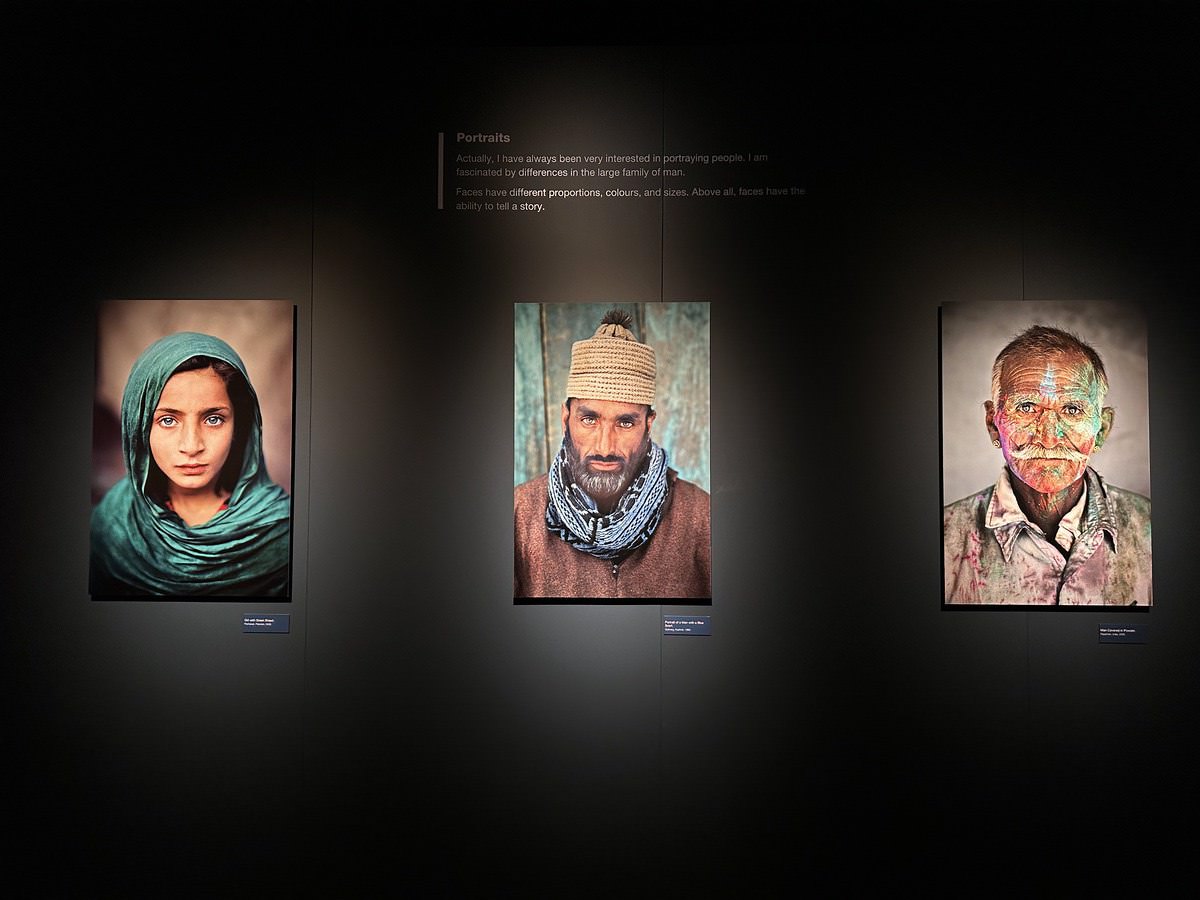
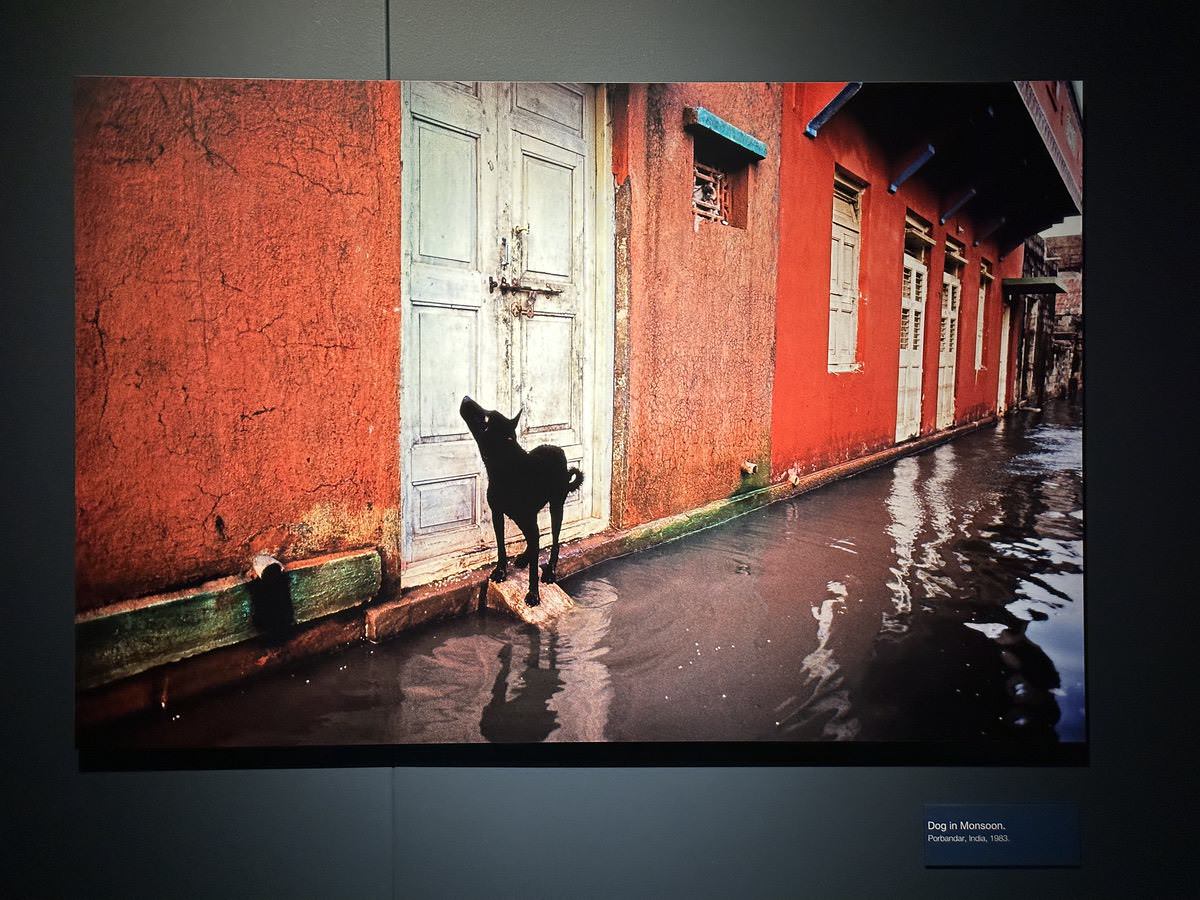
Steve McCurry (b. 1950)
Famous for evocative colour documentary work, including the iconic “Afghan Girl” photograph with mesmerizing green eyes.
Focus: Human struggles, vanishing cultures, contemporary culture
Affiliation: Magnum Photos
Raghubir Singh (1942-1999)
Documented India’s streets with brilliant colour composition, transcending the typical Western photographic gaze.
Influences: William Gedney and American street photography
Medium: Supplied with film by National Geographic
Constantine Manos (b. 1934)
Greek-American photographer known for vibrant street photography.
Focus: Moments of charm revealing themselves in vivid colour. Magnum Photos: https://www.magnumphotos.com/photographer/constantine-manos/
Ernst Haas (1921-1986)
Early colour photography pioneer known for poetic use of colour and motion.
Period: Active in 1950s-60s when colour was still considered illegitimate
Contemporary Masters
Martin Parr (b. 1952)
British photographer known for saturated, often humorous documentation of consumer culture and modern life.
Style: British photographer with ironic eye
Focus: Modern life, tourism, class, consumerism
Affiliation: Magnum Photos
Documentary: I Am Martin Parr (2024)
- https://www.magnumphotos.com/theory-and-practice/i-am-martin-parr/
- IMDB: https://www.imdb.com/title/tt15488478/
Nan Goldin (b. 1953)
Revolutionary for her intimate, saturated colour snapshots documenting her community. Her book “The Ballad of Sexual Dependency” was groundbreaking.
Most Famous Work: The Ballad of Sexual Dependency (1986)
Style: Snapshot aesthetic with rich colour
Medium: Originally designed as slide installation with music
I have a very saturated vision – Nan Goldin
Mona Kuhn (Contemporary)
Contemporary photographer known for intimate portraits and landscapes with distinctive colour palettes, particularly greens and golds.
Style: Greens, golds, and pinks; humanistic perspective
Notable Series: Native (2009) - “vivid poem rendered in green and gold”
Book: Mona Kuhn: Works (Thames & Hudson, 2021) - comprehensive retrospective
Andreas Gursky (b. 1955)
German photographer creating massive-scale colour photographs of contemporary landscapes and consumer culture.
Background: Düsseldorf School
Style: Digital manipulation, vast detailed compositions
Most Famous Work: Rhine II - Sold for $4.3 million, record for photography
Focus: Consumer culture, contemporary landscapes
Technique: Balance between representation and abstraction
Essential Concepts to Study
Colour Theory Fundamentals
- Complementary colours (opposites on colour wheel)
- Analogous colours (neighbors on colour wheel)
- Triadic harmonies (equally spaced colours)
- Colour temperature (warm vs. cool)
- Saturation levels
- Colour psychology
Historical Context
- Why colour was rejected initially (seen as commercial/crass)
- The 1976 Eggleston MoMA show as watershed moment
- How painters influenced colour photography
- The role of technical advances (Kodachrome, dye-transfer)
Technical Aspects
- Dye-transfer printing (Eggleston’s signature process)
- Large-format colour work (Shore, Meyerowitz)
- Different colour films and their characteristics
- Digital colour vs. film colour
Study Approach
For Beginners:
- Start with Eggleston’s William Eggleston’s Guide
- Move to Shore’s Uncommon Places
- Study Leiter’s Early Colour for subtle palette work
- Read Meyerowitz’s Cape Light for light mastery
For Intermediate Students:
- Compare Eggleston’s saturated work with Leiter’s muted tones
- Study Shore’s formal compositions vs. Eggleston’s spontaneity
- Analyze how each photographer uses the colour wheel
- Note technical approaches (large format vs. 35mm, etc.)
For Advanced Study:
- Trace the influence of abstract expressionist painters
- Study the social context of each photographer’s work
- Understand the technical evolution (film types, printing methods)
- Examine how the New American Colour Photography changed the medium
Key Takeaway
These photographers didn’t just use colour—they understood that colour is a language. They saw relationships between hues, understood psychological impacts, and used technical mastery to achieve their visions. Study their work not to copy it, but to understand how deliberate colour choices create meaning, emotion, and visual impact.
This guide is a living document. As you study these photographers, you’ll discover your own favorites and develop your understanding of what makes great colour photography.