
The Three Shot Framework
Posted on April 5, 2026 • 2 minutes • 420 words
The three-shot framework is a concept often used in storytelling and filmmaking that encourages (in our case) photographers to approach a scene by capturing it in three distinct ways: starting with an establishing, wide vista shot, then a mid-shot, and finally a detailed shot.
While it isn’t a strict rule that you must force upon every single scene, it serves as a highly effective exercise in varying the distance between yourself and your subject. By intentionally changing your perspective and distance, you develop a more dynamic photographic eye.
Here is how the three types of shots contribute to a better story:
- Wide Vista Shots: These are the expansive, scene-setting images that establish the overall location, which photographers naturally tend to chase first.
- Mid-Shots: Rather than showcasing the big, wide scene, a mid-shot focuses on emphasizing the subject.
- Detailed Shots (Close-ups): Detail shots capture close-up elements and act as the “punctuation,” “glue,” or a “bridge” between your other photos. They give you a license to explore the abstract or bizarre, and they are incredibly useful for smoothly transitioning a viewer between entirely different locations or scenes, especially when tying them together with common elements like color relationships.
Stop Giving Answers; Start Asking Questions
A “perfect” photo is often a boring one. If you show someone a beautiful sunset, you’ve given them the answer: “This is a nice sunset.” They look for three seconds and move on.
Photos should pose questions. When someone looks at your work, you want them to ask, “Who lives there?” or “What was that building used for?” or, looking at graffiti on a garage door, “Who is Moe?” Intrigue is what keeps a viewer coming back. If your photo provides all the answers immediately, it has a very short life in the mind of the viewer. Detail shots, in particular, should lean toward the abstract or the bizarre to build curiosity and suspense. By capturing elements that trigger internal querie, the photographer ensures the viewer remains engaged with the work.
Ultimately, practicing the three-shot rule like this prevents you from returning home with nothing but wide, repetitive landscapes. By mixing wide, mid, and detailed shots, you produce a significantly more interesting and cohesive collection of images that can build curiosity, add visual pacing, and tell a far more complete story in a photo book, gallery page, or social media post.
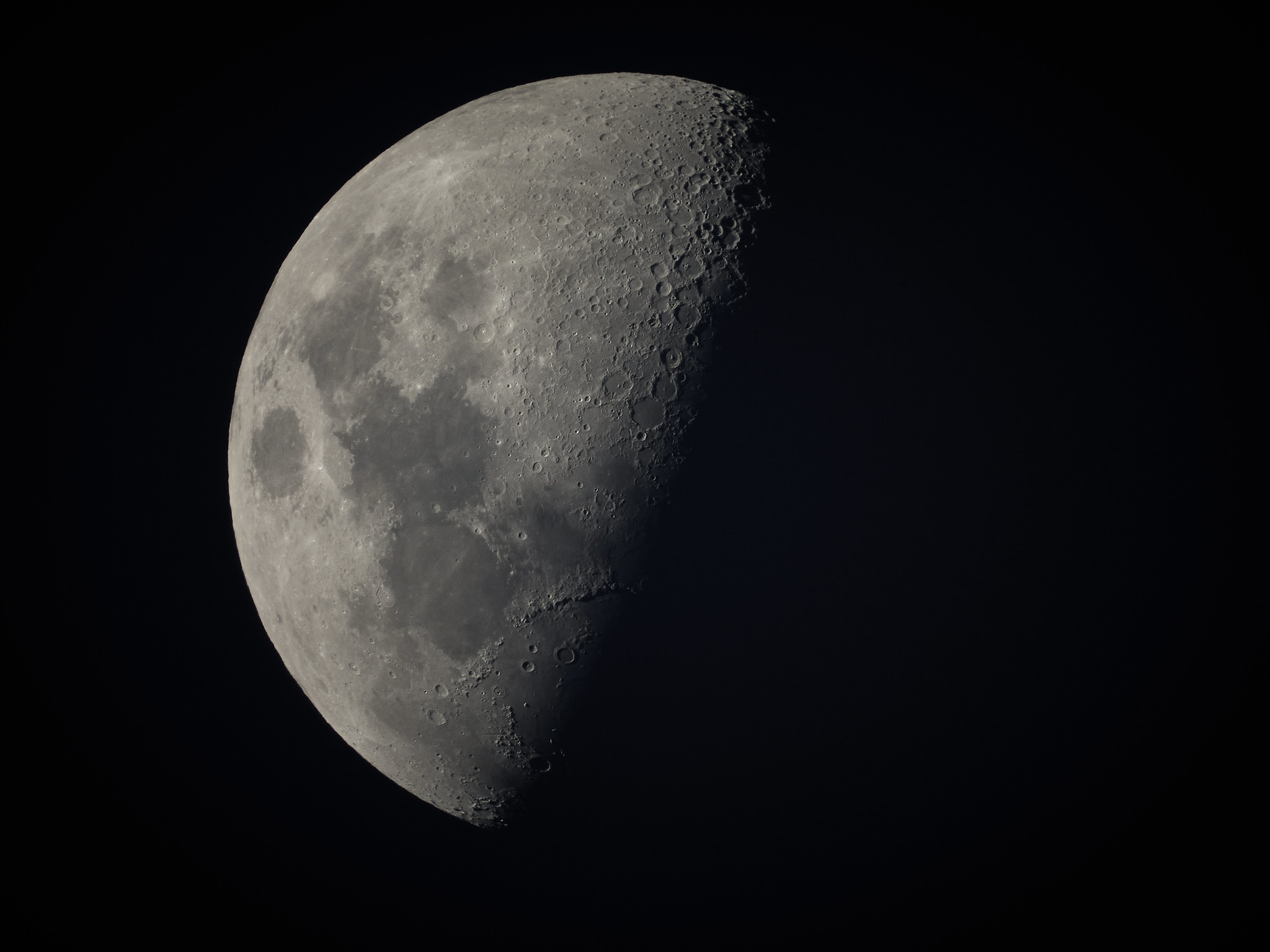
(*) unrelated, a picture of the moon from a few years back (as the Artemis II crew travels to the far side of the moon this week)